

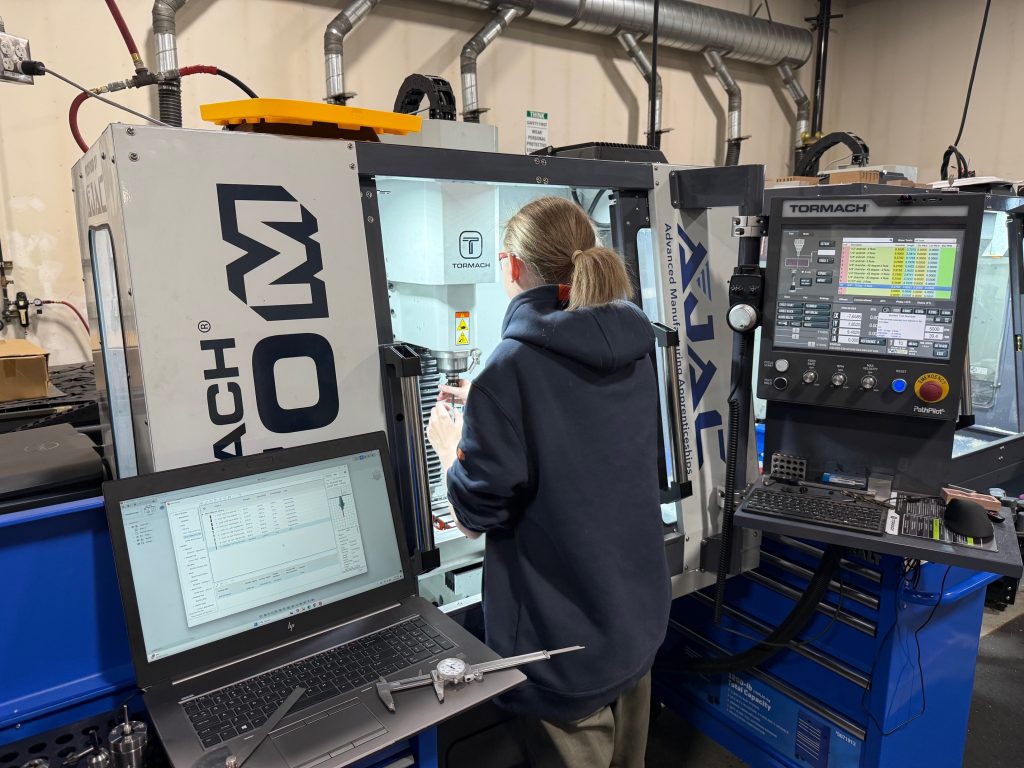
The hum of the machining center generates a steady baseline. Across the shop, the rhythmic click-click-click of micrometers can be heard as its operator verifies tolerances at the manual lathe. This isn’t a production floor, it’s a Tuesday in Salvatore Lorenzen’s Advanced Manufacturing Core Plus Aerospace classroom at Spokane Valley TECH.
At Spokane Valley TECH and Skills Center, Core Plus Aerospace students don’t just learn about advanced manufacturing in the classroom, they have an opportunity to experience it in the real-world. For Salvatore Lorenzen, a Core Plus Aerospace instructor and longtime career and technical education educator, that hands-on, student-centered, experiential approach is intentional.
“This is a place where students learn how to think, how to problem-solve, and how to work together,” Salvatore said. “The great thing about Spokane is there are 1,200 manufacturers here, so there are a lot of opportunities for us to coordinate with industry partners and for students to enter into those careers.”
In Salvatore’s classroom, students rotate through projects and roles, learning from one another while developing transferable skills like teamwork and communication. The Core Plus Aerospace curriculum plays a key part in the student experience by giving students industry specifications that guide their learning of skills like riveting, precision measurement, and drilling.
“The Core Plus Aerospace curriculum is aligned to industry standards and provides students a really good opportunity to get the skills for an entry-level manufacturing job or have a really good understanding of manufacturing to pursue further education,” Salvatore said.
Students also gain experience by having access to industry-grade equipment, including CNC machines, plasma cutters, and advanced fabrication tools made possible through Core Plus Aerospace grants that were provided through the Office of Superintendent of Public Instruction. Salvatore said the machines allow students to understand how parts are made. Their experience on the equipment also gives them a headstart after high school.
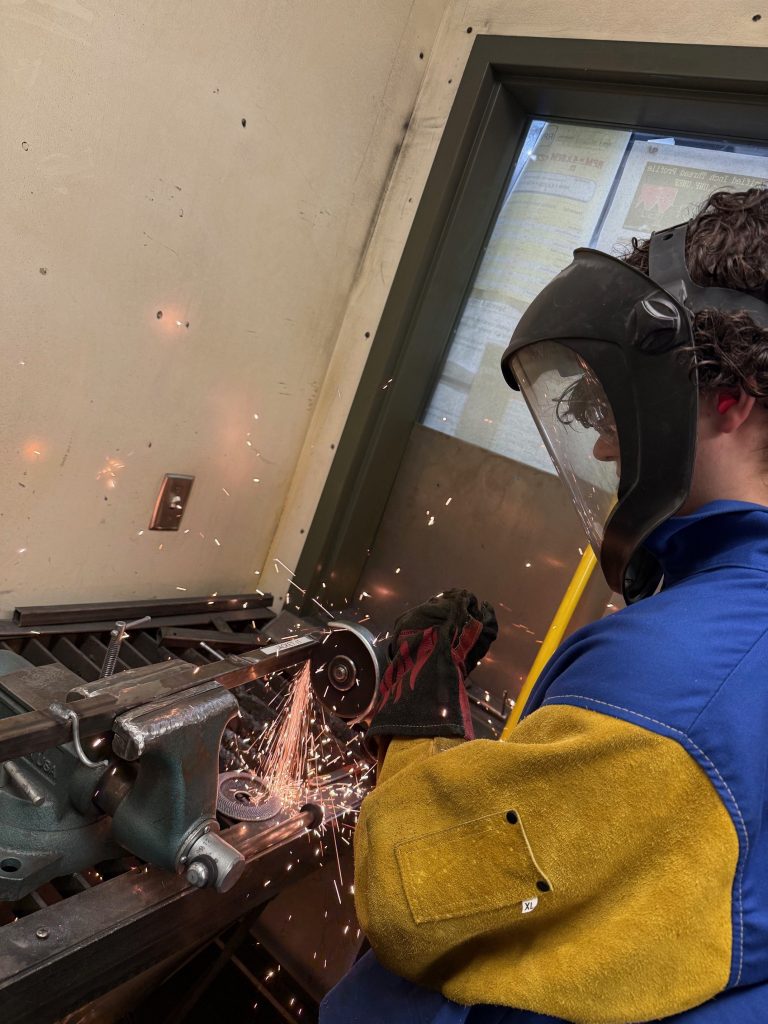
Beyond technical skills, students build workforce readiness through certifications such as OSHA 10 and First Aid/CPR, mock interviews, resume development, and working in teams. Spokane Valley TECH also partners with the Spokane Valley Chamber of Commerce to provide regular industry tours, giving students direct exposure to careers and networking opportunities with professionals in the region.
These experiences are paying off. Many graduates move directly into manufacturing careers locally or with major employers like Wagstaff and Boeing, while other students have pursued engineering degrees. Parents often share how the program helped their students discover a career path.
“This program gives students options,” Lorenzen said. “I’ve had moms hug me at graduation and say, ‘My kid is now going somewhere because of your class;’ Students have an opportunity for solid careers with growth that can support them and their families, and lead to a productive and prosperous life.”